
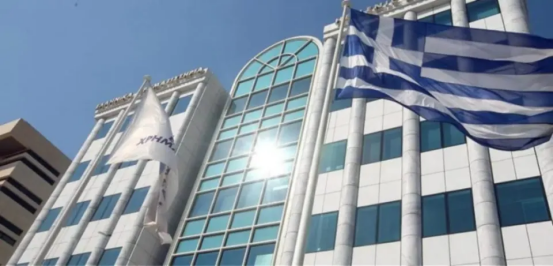
The Athens Stock Exchange is currently on an impressive winning streak, recording highs not seen in the past 15 years and posting steady growth for nine consecutive months.
This positive trend shows that companies listed on the Greek stock exchange are generating strong profits, and a significant amount of buying and selling of shares is occurring.
This booming activity has resulted in a record-breaking period for the Greek market, showing all the signs of a “bull market.” As of last Thursday, July 17, 2025, the Greek stock market is leading the world in gains for 2025, with an impressive increase of 34.86%. This puts it ahead of other strong performers, such as Seoul, South Korea (+33.04%), and Warsaw, Poland (+32.56%).
The Athens Stock Exchange is even outperforming major European stock markets, such as Germany’s DAX 30 (+22.41%), the UK’s FTSE 100 (+9.78%), and France’s CAC 40 (+5.98%). It’s even doing better than big-name US markets, including the Nasdaq (+8.15%), S&P 500 (+7.07%), and Dow Jones (+4.56%).
Despite this significant rise, the stock market’s value (130 billion euros) is just over 50% of its estimated GDP (240 billion euros) for 2025. This 50% figure is considered relatively low compared to other countries, where it might be 70%, 80%, or even 100%, suggesting there’s still room for the Greek market to grow.
Large financial institutions are taking notice. JP Morgan recently suggested that the Greek stock market is a good “overweight recommendation.” This means they advise investors to put more of their money into Greek stocks than they might typically, because they expect good returns with relatively low risk.
Key positive factors highlighted by JP Morgan include:
Capital returns from banks: Greek banks return money to shareholders through dividend yields of 10%.
Share buybacks: The repurchase of a company’s own shares from the market, which can increase the value of remaining shares.
Economic growth of 2%: A growing economy generally supports a rising stock market.
20% discount based on P/E ratio for banks: The Price-to-Earnings (P/E) ratio compares share price to earnings per share. A 20% discount means Greek banks trade at a lower valuation than their European counterparts, making them potentially more appealing.
JP Morgan also points out that Greece is less affected by “tariff risks” (taxes on imported goods) because its main export is tourism, which isn’t typically subject to these tariffs. The Athens Stock Exchange is seen as one of the most attractive globally due to its relatively low market capitalization to GDP ratio compared to other markets.
Another influential firm, Goldman Sachs, has set a “target price” for the Greek stock market’s main index (GDT) at 2,100 points, indicating it is expected that it will rise further. It has upgraded Greece to a “key destination for international investors in emerging markets.”
Several key factors are contributing to this positive momentum, including:
Corporate developments: Major business deals—such as Unicredit’s involvement with Alpha Bank, Metlen’s partnership with the London Stock Exchange (LSE), and the EURONEXT agreement with the Athens Stock Exchange (ATHEX)—are generating buzz and driving investor interest.
Strong economic growth: Greece’s economy grew by 2.2% in the first quarter, well above the European Union’s average of 0.6%, providing a solid foundation for the stock market.
Attractive valuations: The Greek market’s P/E ratio stands at 10, which is still 35% lower than that of main European markets, indicating Greek stocks are generally cheaper relative to their earnings.
Increased foreign investment: Foreign investors contributed €454.6 million (about $530 million) to the Greek market in the first half of the year and accounted for 61.9% of all trading activity, reflecting strong international confidence.
International and local investment firms are still very optimistic about Greek banks.
Goldman Sachs believes the banking sector will continue to rise, supported by its strong “capital adequacy ratios” (meaning they have enough capital to absorb potential losses) and a reduction in “non-performing exposures” (bad loans).
UBS considers Greek banks to be among the most affordable and most attractive in Europe. Bank of America sees significant “upside potential” (room for share prices to increase) for the four main Greek banks. The combination of growing loan portfolios and high dividend payments is seen as a powerful driver for continued strong performance in Greek bank stocks.
Par. Leof. Vouliagmenis 503, Ilioupoli 163 41
+30 2109922519
info@hestia-group.gr
45/F, Tower E, Poly World Trade Center, Haizhu District,
Guangzhou, China
020-89119872
info@hestia-group.gr
320 Ben Van Don Street, Vinh Hoi Ward,
Ho Chi Minh City, Vietnam
0902 803 979
office@vietnamprivate.com



 EN
EN CN
CN GR
GR IL
IL RU
RU TR
TR VI
VI IQ
IQ