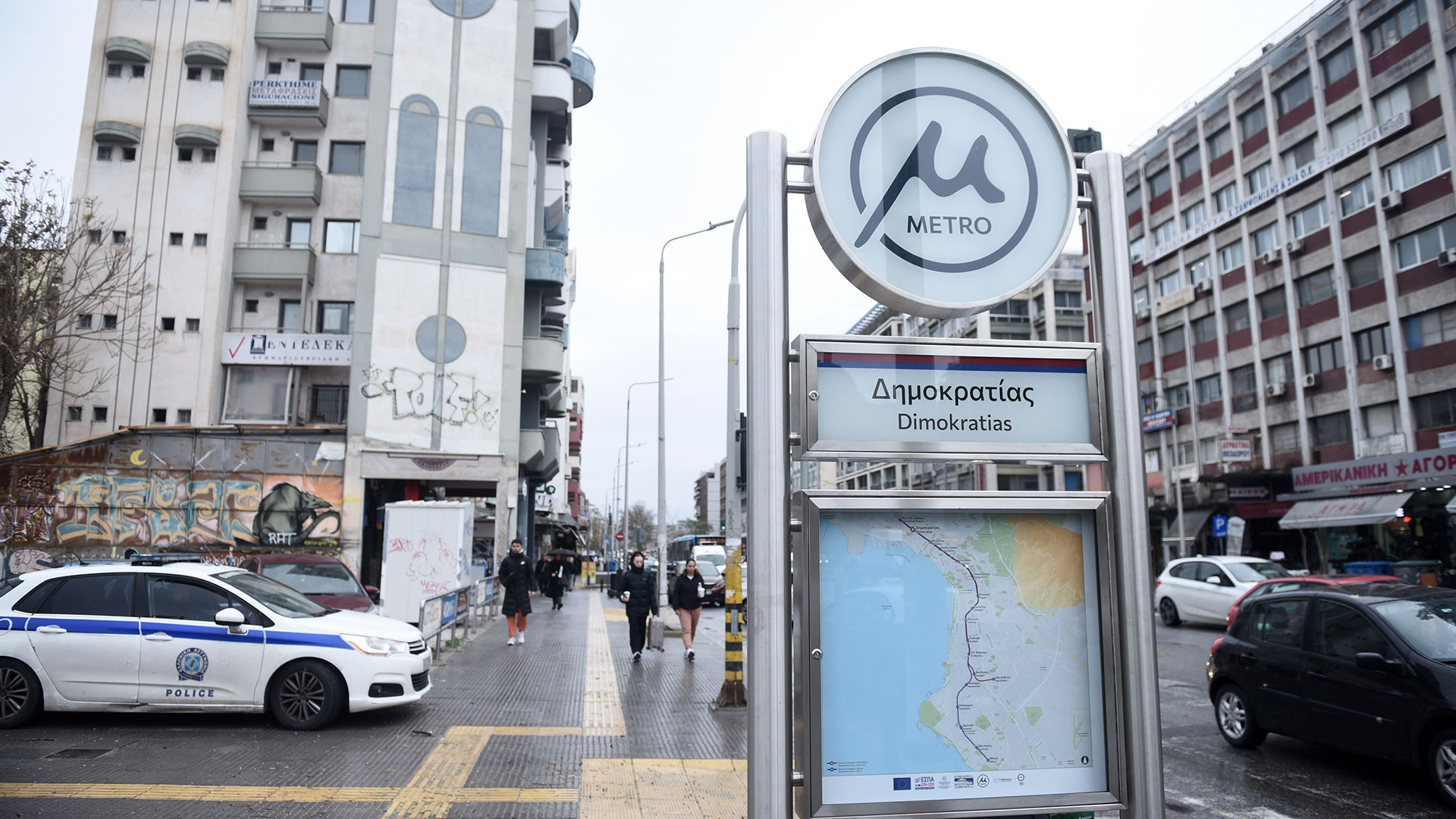
The Thessaloniki Metro, inaugurated last November after years of delays, has had a significant impact on property values, causing notable variations across different real estate sectors, according to a new study.
A study by Cerved Property Services (CPS), presented at a conference organized by the Association of Greek Valuers (SEKE), found that in the office sector – where rental prices have been rising across the municipality of Thessaloniki for the past two years – the most significant increases were recorded in the city center and the Vardaris neighborhood, particularly within 350 meters of metro stations. Specifically, rental prices for properties located on Vasileos Irakleiou, Ermou, Ionos Dragoumi, and Egnatia streets increased by 40% to 58% between 2020 and 2024.
Conversely, in the retail sector, the study indicates that the metro’s influence is limited to a 250-meter radius from the stations, with more moderate price increases. Although property owners initially raised asking prices by up to 50% when the metro became operational, market demand has yet to fully respond. As a result, many vacant retail spaces remain within the metro influence zones, particularly around the Egnatia, Fleming, Analipsi, and 25 Martiou stations.
A fully developed commercial market exists only within 250 meters of the Agias Sofias station, which had already been one of the city’s prime commercial areas before the metro’s launch.
The main shopping streets, Tsimiski and Mitropoleos, are located more than 500 meters from the nearest metro stations and, according to the study, fall outside the metro’s zone of influence. Price trends in these key commercial corridors remain upward, though this growth is not attributed to the metro’s operation.
Regarding residential properties, the CPS index, which tracks price trends across Greece, has recorded continuous growth in Thessaloniki since 2018. Between 2020 and 2024, property prices in the wider Thessaloniki metropolitan area increased by 50%, regardless of whether an area is currently served or will soon be served by the metro. However, property values near the Papafi, Efklidis, Fleming, Analipsi, and 25 Martiou stations – particularly for buildings constructed in the 1970s and 1980s, which make up the majority of properties in these areas – have surged by up to 60%, surpassing the metropolitan area’s average growth for the same period.
The study also highlights that the western municipality of Kalamaria, which is set to be connected to the metro in the near future, has already experienced price increases of up to 35% over the past two years, signaling the potential for even greater appreciation once metro services commence in the area.
Par. Leof. Vouliagmenis 503, Ilioupoli 163 41
+30 2109922519
info@hestia-group.gr
45/F, Tower E, Poly World Trade Center, Haizhu District,
Guangzhou, China
020-89119872
info@hestia-group.gr
320 Ben Van Don Street, Vinh Hoi Ward,
Ho Chi Minh City, Vietnam
0902 803 979
office@vietnamprivate.com




 EN
EN CN
CN GR
GR IL
IL RU
RU TR
TR VI
VI IQ
IQ